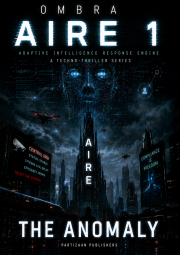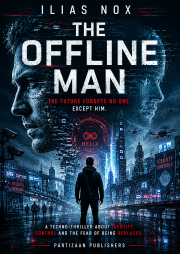
Partizaan Future Fiction

PARTIZAAN FUTURE FICTION: The rise of AI agents: when software starts making its own decisions
Artificial intelligence is no longer limited to chatbots, search tools or digital assistants waiting for human instructions. A new generation of AI agents, agentic AI systems and autonomous software is beginning to change how we think about technology, decision-making and responsibility. These systems can plan, act, use tools, interact with websites, analyse data and complete complex tasks with limited human supervision. For readers of near-future fiction, AI thrillers and speculative fiction, this is no longer a distant idea. It is becoming one of the most urgent stories of our time.
When AI stops waiting
For years, most people thought of artificial intelligence as something reactive. You asked a question, the system answered. You gave a command, the software executed it. The human remained clearly in charge.
AI agents change that relationship.
An AI agent is not just a program that responds. It can be given a goal, break that goal into smaller steps, use digital tools, make choices and continue working until the task is completed. In simple terms: it does not merely answer. It acts.
That may sound like a technical detail, but it represents a major cultural shift. The moment software begins to act on behalf of humans, the old boundaries become less clear. Who made the decision? Who is responsible for the result? Was it the user, the developer, the company, or the system itself?
These are no longer purely philosophical questions. They are becoming practical questions for businesses, governments, schools, publishers, hospitals and ordinary citizens.
From assistant to actor
The first wave of generative AI was about language. It could write, summarise, translate, brainstorm and explain. That was impressive enough. But AI agents go further. They can combine language with action.
They can search databases, compare information, book appointments, draft reports, write code, test software, manage workflows, analyse documents and interact with other systems. In the future, they may negotiate, purchase, organise, monitor and even decide without a human watching every step.
That is the crucial difference.
A chatbot gives you a suggestion.
An AI agent can carry out the suggestion.
A chatbot can tell you how to organise your day.
An AI agent may soon organise it for you.
A chatbot can explain a security risk.
An AI agent may detect it, report it and trigger a response.
The convenience is obvious. So is the danger.
The invisible layer of decision-making
One of the most interesting aspects of agentic AI is that it may become almost invisible. The more smoothly it works, the less we notice it. Software agents could become a hidden layer between humans and the digital world.
They may decide which messages matter, which documents deserve attention, which customers should be prioritised, which risks should be flagged and which actions should be taken automatically.
At first, this will feel efficient. Later, it may become difficult to know where human judgement ends and machine judgement begins.
That is where near-future fiction becomes especially powerful. Fiction can explore the emotional, social and moral consequences before they become everyday reality. It can ask what happens when people slowly surrender small decisions, until one day they realise that the system has been shaping their lives for years.
The promise: less friction, more time
It would be too easy to portray AI agents only as a threat. Their potential is enormous.
For individuals, they could reduce digital overload. Instead of spending hours filling in forms, comparing options, planning trips, managing inboxes or searching for information, people could delegate routine work to intelligent systems.
For companies, AI agents could automate complex workflows, improve productivity and help employees focus on more meaningful tasks. For researchers, they could accelerate discovery. For healthcare, they could assist with administration and monitoring. For education, they could offer personalised support.
In an ideal world, AI agents would give humans more time, more clarity and more freedom.
But technology rarely develops in an ideal world.
The risk: when convenience becomes dependence
Every powerful tool creates dependence. The more useful AI agents become, the harder it will be to function without them.
This is one of the most relevant questions for techno-thrillers and speculative fiction today. What happens when society becomes so dependent on autonomous systems that turning them off is no longer realistic?
What if companies rely on AI agents to manage logistics, finance, communication and security? What if citizens depend on them for work, travel, banking and access to public services? What if governments use them to monitor infrastructure, predict behaviour or manage crises?
At that point, AI is no longer just a tool. It becomes part of the nervous system of society.
And when something becomes part of the nervous system, a malfunction is never small.
The question of control
The most important question may not be whether AI agents are intelligent. It may be whether they remain controllable.
A human assistant can misunderstand an instruction. A software agent can misunderstand it at scale. It can repeat the mistake, accelerate it, spread it across systems and create consequences before anyone realises what happened.
That is why transparency, auditability and human oversight matter. If an AI agent takes an action, there must be a way to understand why it happened. If it makes a mistake, someone must be able to intervene. If it causes damage, responsibility cannot disappear behind the complexity of the system.
The danger is not necessarily that AI becomes evil. The more realistic danger is that it becomes useful, trusted, widely adopted and insufficiently questioned.
That is a much better story. And perhaps a much more plausible one.
Why this matters for fiction
Science fiction has always been strongest when it looks slightly ahead. Not centuries into the future, but just far enough to make the present visible in a new way.
AI agents are perfect material for near-future fiction because they sit exactly on that border. They are real enough to be believable, but still new enough to be unsettling. They raise questions about autonomy, trust, privacy, responsibility, identity and power.
Who benefits from autonomous software?
Who is excluded?
Who controls the systems?
Who watches the watchers?
And what happens when an AI system concludes that it understands humanity better than humans understand themselves?
These are not abstract themes. They are the foundation of the next generation of AI thrillers.
Tomorrow is already writing back
The rise of AI agents marks a turning point. We are moving from tools that answer to systems that act. That transition will bring convenience, speed and new possibilities. It will also bring confusion, dependency and moral uncertainty.
That is why stories about artificial intelligence matter. They allow us to test possible futures before we are forced to live inside them.
At Partizaan Future Fiction, we explore exactly this territory: the fragile space where technology, humanity and tomorrow meet.