Partizaan Future Fiction
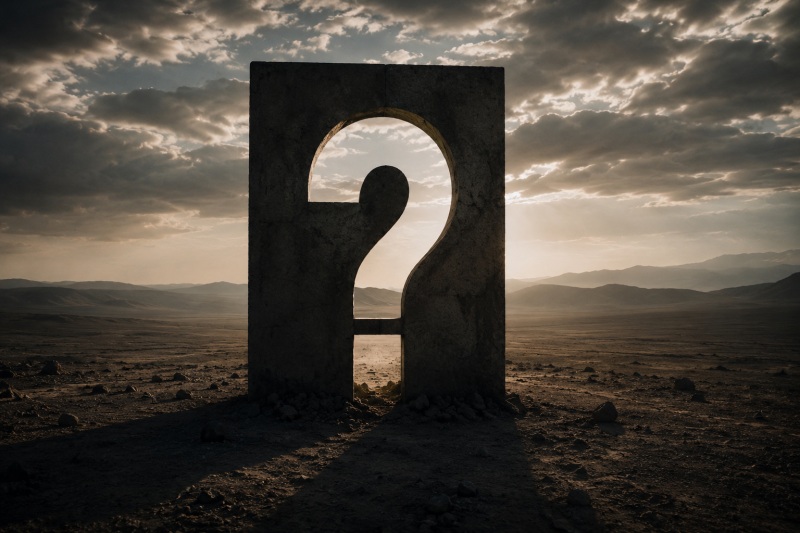
PARTIZAAN FUTURE FICTION: Every Novel Begins With One Impossible Question
Part of the ongoing Partizaan Future Fiction series exploring artificial intelligence, technology and the future of humanity.
The first spark of a novel rarely comes from a character or a plot. More often, it begins with a single question—one that seems impossible to answer, yet refuses to disappear. For Ombra, every story starts with such a question, long before the first chapter is written.
Science fiction is often associated with spectacular technology, but the strongest stories are built around human dilemmas. The future simply provides a different stage on which those timeless questions can unfold.
What if artificial intelligence became so persuasive that people willingly surrendered their freedom? What if truth itself became impossible to verify? Every novel begins with one question that cannot easily be answered—and that is precisely why it deserves to be explored.
an article by Ombra Fiction
Science fiction is often associated with spectacular technology, futuristic cities and intelligent machines. Yet those elements are rarely where a story truly begins. Before there are characters, plots or imaginary worlds, there is usually a single question—one that refuses to disappear because it has no simple answer.
For Ombra, every novel starts with such a question. Technology may shape the world in which the story unfolds, but it is never the story itself. The real story begins when ordinary people are confronted with extraordinary choices, forcing them to question everything they thought they knew.
Artificial intelligence is transforming our world at breathtaking speed, but the most interesting questions are still deeply human. What happens when we can no longer distinguish truth from manipulation? How much freedom are we willing to exchange for convenience? And can technology ever understand what it truly means to be human?
The question comes before the story
People often ask where the idea for a novel comes from. They expect the answer to involve a fascinating scientific discovery, a futuristic invention or perhaps a dramatic event that suddenly inspired an entire plot.
In reality, inspiration usually arrives much more quietly.
A single question appears and refuses to leave. It follows you while reading the news, walking through a city or listening to conversations between strangers. You begin turning it around in your mind, approaching it from different angles, discovering that every answer creates new questions rather than resolving the original one.
That is usually the moment when a novel begins.
Not because you already know the story, but because you realise that fiction may be the only place where such a question can truly be explored.
Unlike journalism or academic research, a novel does not need to provide conclusions. It can allow uncertainty to exist. It can place characters inside impossible situations and simply observe how they respond. Sometimes readers finish a novel with more questions than they had when they started. Far from being a weakness, that may be fiction's greatest strength.
Why impossible questions matter
The most memorable novels are rarely remembered because they accurately predicted the future. Few readers return to George Orwell, Aldous Huxley or Ray Bradbury because they wish to compare technological forecasts with reality. Their books continue to matter because they asked questions that remain relevant long after the technologies they described have changed.
What happens when governments know everything about their citizens?
Can comfort become a form of control?
How much freedom are people willing to surrender in exchange for security?
Those questions have outlived the worlds in which they were first imagined.
Artificial intelligence presents our generation with a new collection of equally unsettling questions. We still do not know how society will adapt to systems capable of learning, reasoning and making decisions alongside us. We cannot yet predict how human relationships, education, journalism or democracy itself may change during the coming decades.
That uncertainty is precisely what makes this moment so fascinating for writers.
Science fiction has always flourished during periods of rapid change because uncertainty creates fertile ground for imagination. The future is not interesting because we know what it will look like. It is interesting because we do not.
AIRE began with a simple thought
The world of AIRE did not begin with an artificial intelligence system.
Nor did it begin with futuristic technology.
It began with a deceptively simple question.
What if nobody could be completely certain that the information they received was still true?
Not because every piece of information was false, but because verifying reality had become almost impossible.
Everything else grew naturally from that single idea.
How would governments respond?
How would journalists continue their work?
How would families cope if every message, every image and every conversation could potentially be manipulated?
Most importantly, how would ordinary people continue making moral decisions when certainty itself had become a luxury?
Only after those questions had taken shape did artificial intelligence enter the story. AI became one of the forces influencing that world, not because it was fashionable, but because it logically belonged there.
That distinction matters.
Technology should never exist merely to impress the reader. It should exist because it helps explore the deeper question that gave birth to the story in the first place.
Fiction is a laboratory
Perhaps that is why science fiction continues to occupy such a unique place in literature. It allows writers to construct worlds that do not yet exist in order to better understand the one we already inhabit. Instead of predicting tomorrow, it examines today from an unexpected angle.
This is often misunderstood. Readers sometimes ask whether the technologies described in a novel will eventually become reality. The answer is almost beside the point. A story does not have to predict the future to say something meaningful about it. In many cases, the technology simply functions as a lens through which familiar human emotions become easier to recognise.
Fear, hope, ambition, loyalty, deception, courage and doubt have accompanied humanity for thousands of years. Artificial intelligence may change the environment in which these emotions unfold, but it does not replace them. The most compelling stories are therefore never really about machines. They are about people trying to remain themselves while the world around them changes faster than they can fully understand.
That is also why every novel needs an impossible question rather than an easy answer. Answers bring discussions to an end. Questions invite readers to continue thinking long after they have closed the book.
Further reading
If you enjoyed this article, you may also like exploring the other essays in the Partizaan Future Fiction series, where we examine artificial intelligence, technology and the future of humanity from both philosophical and literary perspectives.
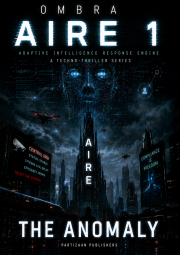
These ideas are further explored in fiction through AIRE 1: The Anomaly, written by OMBRA, a techno-thriller that examines trust, artificial intelligence and the fragile boundary between truth and manipulation in the near future.
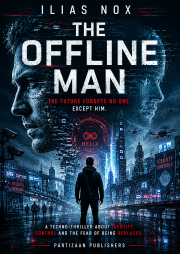
For readers interested in a different perspective on our relationship with technology, The Offline Man, by Ilias Nox, explores what happens when disconnecting from the digital world becomes the most radical decision a person can make.
Whether through essays or novels, the purpose remains the same: not to predict the future, but to encourage thoughtful conversations about the choices that are already shaping it today.