
Partizaan Future Fiction
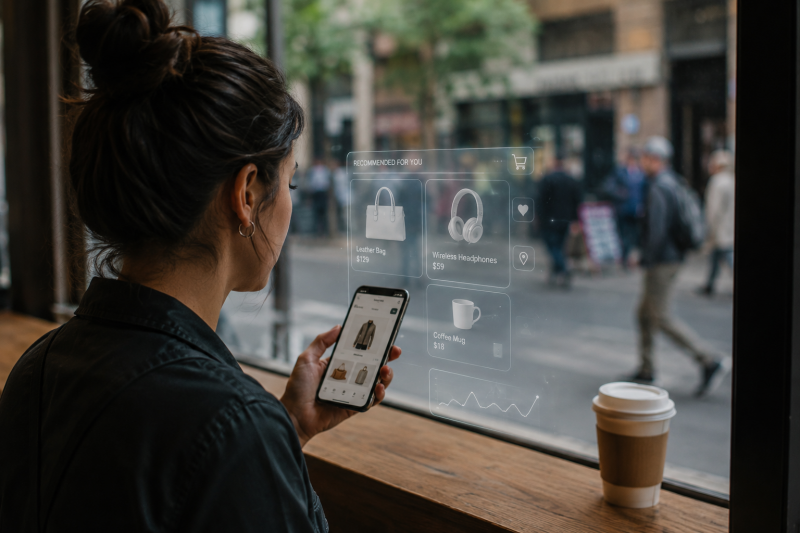
PARTIZAAN FUTURE FICTION: The algorithm that knows you better than yourself
Part of the ongoing Partizaan Future Fiction series exploring artificial intelligence, technology and the future of humanity.
Every time you click, scroll, pause, search or buy something online, you leave behind tiny pieces of information. On their own, they seem meaningless. Together, they form one of the most detailed portraits ever created of a human being. The surprising question is no longer whether algorithms know us well—but whether they might eventually know us better than we know ourselves.
Artificial intelligence is rapidly moving from assisting people to making decisions on their behalf. How much control are we willing to hand over—and what happens when we can no longer understand the systems that decide our future?
Imagine opening your favorite streaming service.
Before you even think about what you want to watch, it already presents the perfect movie.
You browse an online bookstore, and the first recommendation is exactly the novel you didn't know you wanted. Your music app creates a playlist that somehow matches your mood. Your online store predicts what you'll need before you search for it.
Coincidence?
Not anymore.
Modern recommendation algorithms have become astonishingly accurate. They analyze thousands of signals: what you click, how long you read, when you stop scrolling, which articles you ignore, what time of day you're most active, even how quickly you move your mouse.
Each action seems insignificant.
Together, they become a behavioral fingerprint.
Researchers have shown that algorithms can often predict personality traits, political preferences, shopping habits and even emotional states with remarkable accuracy. They do not understand us the way another human does. Instead, they recognize patterns hidden inside enormous amounts of data.
And patterns can be surprisingly revealing.
Imagine an algorithm that notices you always order takeout after stressful workdays. It recognizes that your music choices become slower when you're feeling down. It predicts when you're likely to postpone important decisions. Over time, it doesn't simply observe your behavior—it begins anticipating it.
That raises an uncomfortable question.
If an algorithm can reliably predict your next decision, how free is that decision really?
Some experts argue that predictive systems merely reflect who we already are. Others worry they gradually influence our choices by deciding what we see, what we don't see and which options appear first.
Recommendations slowly become expectations.
Expectations slowly become habits.
Habits quietly shape lives.
This isn't necessarily the result of a conspiracy. Most recommendation systems are designed to maximize engagement, customer satisfaction or sales. They learn from billions of interactions and continuously refine their predictions.
The technology itself is neutral.
Its consequences may not be.
As artificial intelligence becomes more sophisticated, recommendation systems are evolving into personal assistants capable of planning schedules, managing finances, suggesting purchases and even helping make life decisions.
Convenience has always been technology's greatest selling point.
But convenience comes with a subtle trade-off.
The more decisions we delegate, the fewer decisions we actively make ourselves.
Perhaps the greatest risk isn't that algorithms know us better than we know ourselves.
Perhaps it is that we eventually stop trying to know ourselves at all.
That is where science fiction becomes more than entertainment. It explores futures that are still invisible today, asking questions long before they become everyday reality.
The future may not arrive with robots walking our streets.
It may arrive quietly, one recommendation at a time.
Curious about the future of artificial intelligence, technology and human decision-making?
Discover AIRE 1 – The Anomaly by Ombra Fiction, a near-future techno-thriller where an intelligent system begins making decisions no one fully understands.
Or read The Offline Man by Ilias Knox, a psychological thriller exploring what happens when disconnecting from the digital world becomes the most dangerous choice of all.
Both novels are part of the Partizaan Future Fiction collection.