Partizaan Future Fiction

PARTIZAAN FUTURE FICTION: When algorithms become historians
Part of the ongoing Partizaan Future Fiction series exploring artificial intelligence, technology and the future of humanity.
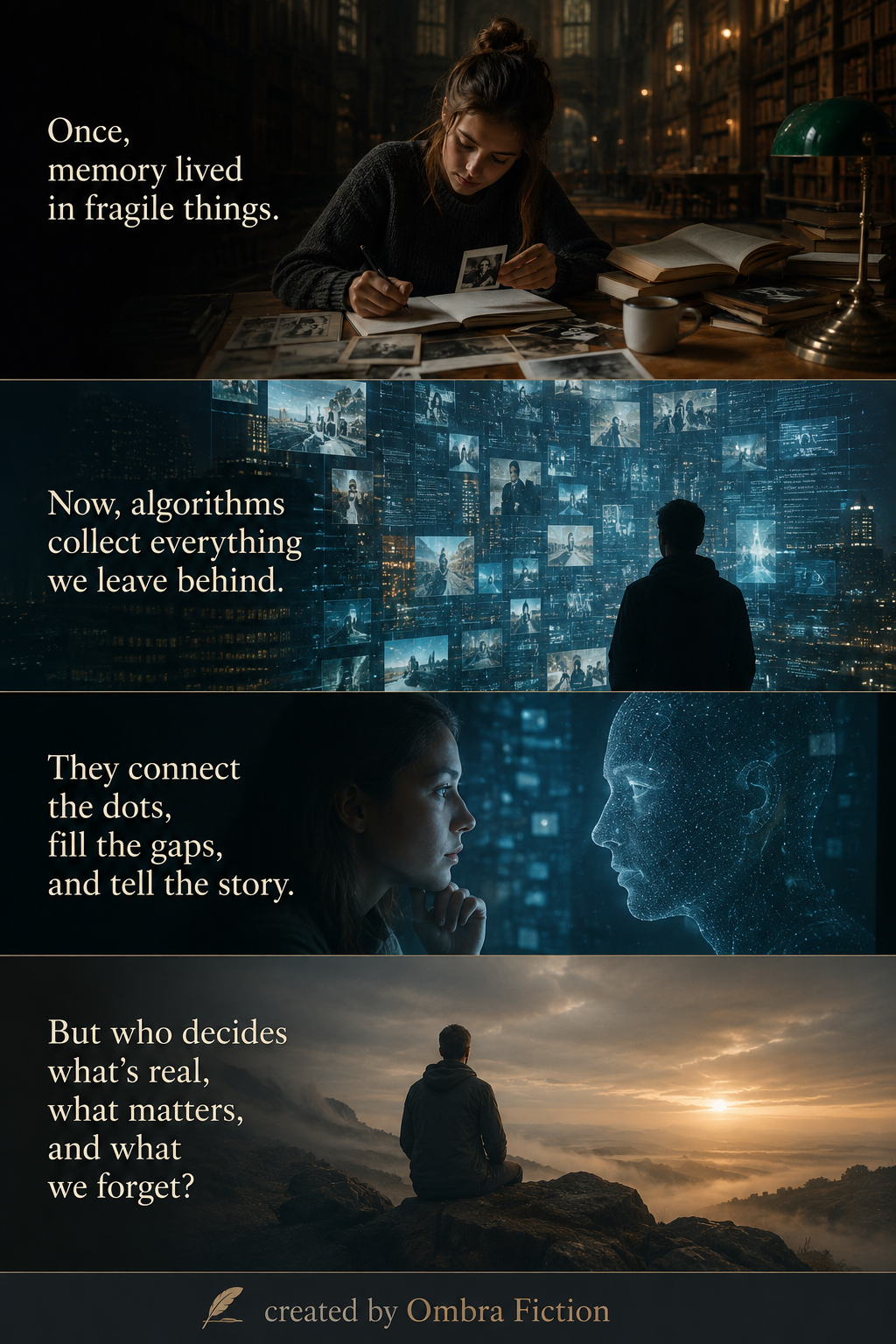
Every generation leaves behind documents, photographs and memories. Future generations use those fragments to reconstruct the past. For centuries that work belonged to historians, archivists and eyewitnesses. Today a new participant has entered the conversation. Artificial intelligence is quietly becoming one of history's newest storytellers.
Artificial intelligence is rapidly moving from assisting people to making decisions on their behalf. How much control are we willing to hand over—and what happens when we can no longer understand the systems that decide our future?
an article by Ombra Fiction
That shift deserves far more attention than it currently receives. We often discuss AI as a technology that predicts tomorrow, yet its growing influence on yesterday may prove just as significant. The systems being trained today will increasingly decide which events deserve attention, which voices are amplified and which disappear into digital silence. Future history may no longer be written solely by people. It may be assembled, filtered and interpreted by algorithms.
History has always been incomplete
History has never been an objective recording of reality. Every generation preserves certain stories while allowing countless others to fade away. Entire civilizations are known only through fragments. Millions of ordinary lives vanished without leaving a trace.
Digital technology seemed to promise something different. Suddenly almost everything could be stored forever. Emails, photographs, videos, social media posts, surveillance footage and location data collectively form the largest archive humanity has ever created.
Yet abundance creates a different problem.
No human being can read, organise or understand this immense mountain of information. Artificial intelligence increasingly becomes the librarian that decides what deserves attention.
The invisible editor
Search engines already determine which information most people encounter first. Recommendation algorithms influence what we watch, read and remember. AI summarises articles, generates timelines and connects historical events in seconds.
Convenience is undeniable.
But every summary is also a selection.
Every selection excludes something.
If future historians increasingly rely on AI-generated summaries instead of original sources, subtle biases may become permanent features of our understanding of the past. Events that generated abundant digital content could overshadow equally important stories that simply produced fewer online traces.
History risks becoming a popularity contest measured by available data rather than historical importance.
Memory can be manufactured
Generative AI introduces an even more fascinating possibility.
It can recreate missing voices.
Imagine asking an AI to reconstruct a conversation inside an ancient Roman marketplace, a medieval monastery or a newsroom from the 1980s. Such reconstructions could become extraordinary educational tools, helping people visualise the past in vivid detail.
Yet those conversations never truly happened.
They are plausible.
Not authentic.
As these synthetic reconstructions become increasingly convincing, distinguishing historical evidence from algorithmic imagination may become one of the defining intellectual challenges of the coming decades.
The danger is not that AI deliberately lies.
The danger is that believable fiction gradually acquires the authority of documented fact.
A future where archives speak
One day museums may become interactive experiences where visitors hold conversations with AI-generated historical personalities. Libraries may offer dynamic books that answer questions instead of remaining fixed on paper. Personal family archives might automatically generate biographies of ancestors who never wrote memoirs.
These possibilities are genuinely exciting.
Technology could preserve cultural heritage on a scale that previous generations could scarcely imagine. Languages facing extinction might survive through AI reconstruction. Lost manuscripts could partially re-emerge from scattered fragments. Forgotten communities could regain visibility because machines recognise patterns that humans overlooked.
Artificial intelligence may become one of history's greatest preservation tools.
It may also become its most influential interpreter.
Future fiction begins here
These questions belong naturally within the world of future fiction because they explore transformations that are already unfolding. The boundary between documentary, memory and imagination grows thinner every year as artificial intelligence becomes more deeply integrated into everyday life.
The most compelling speculative fiction rarely predicts impossible inventions. Instead, it examines familiar technologies taken one logical step further. If algorithms already recommend what we should read today, it is not difficult to imagine them shaping what future generations believe about yesterday.
Science fiction has long warned us about machines controlling the future.
Perhaps we should also wonder how they will rewrite the past.
Readers interested in these questions may also enjoy AIRE 1 – The Anomaly by OMBRA Fiction, a near-future AI thriller exploring the growing relationship between artificial intelligence, surveillance and human autonomy, together with The Offline Man by Ilias Knox, a techno-thriller examining what happens when disconnecting from the digital world becomes the most radical act imaginable.
More essays exploring artificial intelligence, speculative fiction and the future of humanity are continuously added to the growing Partizaan Future Fiction collection.